
Figuring out how to start personal training in Toronto can feel overwhelming when you’re unsure where to begin or how to find the right fit for your goals. Many people struggle to identify qualified trainers, understand what to expect, or commit to a routine that delivers real progress. This guide walks you through the essential steps to prepare, choose a trainer, execute a personalized plan, and achieve measurable results. Whether you’re recovering from injury, building strength, or simply seeking accountability, you’ll discover practical strategies tailored to Toronto and the Davisville area that set you up for long-term success.
Table of Contents
- Key takeaways
- What you need to start personal training in Toronto
- How to find and choose the right personal trainer
- How to start and maintain your personal training journey
- Common challenges and how to overcome them
- Start your personal training journey with Striation 6 in Toronto
- FAQ about starting personal training in Toronto
Key Takeaways
| Point | Details |
|---|---|
| Early assessment consult | Starting with an early assessment and consultation helps tailor a plan to your goals and any limitations. |
| Certified trainers in Toronto | Choose trainers with CanFitPro, NESTA, or CSEP certifications and current CPR and AED training to ensure safety and competence. |
| Consistent training schedule | Aim for sessions two to three times per week for at least eight weeks to see meaningful progress. |
| Compare facility options | Explore local gyms and therapy clinics in Davisville and surrounding Toronto areas to match your preferred environment and services. |
What you need to start personal training in Toronto
Before you book your first session, understanding the qualifications and local options available in Toronto helps you make informed decisions. Personal trainers in Ontario must hold recognised certifications such as CanFitPro, NESTA, or CSEP, along with current CPR and AED training. They need a high school diploma, must be at least 18 years old, and renew their credentials every two to four years with 10 to 30 continuing education credits. While Ontario has no provincial regulation for personal trainers, employers and insurance providers enforce these standards to ensure client safety and professional competence.
When you’re ready to explore local facilities, the Davisville area offers several excellent choices. GoodLife Fitness provides a large gym environment with diverse equipment and group classes. Striation 6 specialises in personalised training, health assessments, and small group sessions in a boutique setting. Davisville Active Therapy integrates physiotherapy with personal training for injury rehabilitation. Each option caters to different preferences, whether you prioritise community atmosphere, one on one attention, or therapeutic support.
Comparing these facilities helps you identify the best match for your lifestyle and goals. The table below outlines key features of popular training centres near Davisville.
| Facility | Location | Unique Features |
|---|---|---|
| GoodLife Fitness | Multiple Toronto locations | Large equipment selection, group classes, extended hours |
| Striation 6 | Davisville area | Boutique setting, customised plans, health assessments, low wait times |
| Davisville Active Therapy | Davisville | Physiotherapy integration, injury recovery focus, corrective exercise |
| BridgeHealth | Midtown Toronto | Multidisciplinary clinic, rehab specialists, holistic approach |
| 3 Seasons PT | Near Davisville | Small group training, seasonal programs, outdoor options |
A Great Pro Tip to Start Your Toronto Personal Training Search
Pro tip: Book free consultations or introductory sessions at two or three gyms to experience the environment, meet trainers, and discuss your goals. This hands on approach reveals which facility aligns with your preferences and provides the personalised attention you need. Many personal trainers in Toronto offer complimentary assessments that include movement screening, goal setting, and sample workouts, giving you a clear preview of their coaching style before you commit.
Understanding what Toronto fitness trainers bring to the table ensures you select someone whose expertise matches your needs. Certified professionals design programs based on evidence, adapt exercises for your current fitness level, and monitor progress to adjust intensity and volume. They also provide accountability, motivation, and education on proper form, reducing injury risk and maximising results.
How to Find and Choose the Right Personal Trainer
Selecting a personal trainer who understands your goals and communicates effectively makes the difference between sporadic workouts and consistent progress. Start by scheduling free consultations to assess compatibility and discuss your specific needs. During these sessions, you’ll learn how trainers structure programs, handle challenges, and tailor exercises to your fitness level and any physical limitations.
Personal Trainer Sepcializations
Evaluate trainers using clear criteria to ensure they meet professional standards and match your preferences. Specializations matter too. Some trainers excel in corrective exercise, others in sports conditioning or senior fitness. Communication style is equally important. You need someone who listens, explains concepts clearly, and adjusts their approach based on your feedback.
Location
Location and convenience play a significant role in maintaining consistency. Davisville residents benefit from several nearby options that reduce travel time and make it easier to stick to your schedule. Proximity to home or work removes barriers and increases the likelihood you’ll attend sessions regularly, especially during busy weeks or challenging weather.
What to Ask in Your Initial Consultation
During initial consultations, ask questions that reveal the trainer’s approach and suitability for your needs:
- What certifications and continuing education have you completed recently?
- How do you customise programs for clients with similar goals or physical conditions?
- What does a typical session structure look like, and how do you track progress?
- How do you handle plateaus or setbacks in training?
- Can you provide references or testimonials from current or past clients?
- What is your cancellation policy and session scheduling flexibility?
These questions help you gauge professionalism, expertise, and whether the trainer’s methods align with your expectations. Pay attention to how they respond. A qualified trainer will answer confidently, provide examples, and ask questions about your background and goals to understand your unique situation.
Pro tip: Use free trial sessions to experience the gym environment and trainer approach firsthand. Observe how the trainer interacts with other clients, the cleanliness and organization of the facility, and whether you feel comfortable and supported. This trial period lets you assess the overall atmosphere and confirm that the trainer’s coaching style motivates you. Many features of the best Toronto personal trainers include adaptability, strong communication, and a genuine interest in your success, which you’ll notice during these sessions.
Moreover, taking advantage of free gym trial tips ensures you maximize the opportunity to explore different facilities and trainers before making a financial commitment. This strategic approach saves time and money while increasing the chances you’ll find a long-term training partner who keeps you engaged and progressing.
How to Start and Maintain Your Personal Training Journey
Once you’ve chosen a trainer, understanding the steps to begin and sustain your training journey sets you up for consistent progress and lasting results. Follow this structured approach to make the most of your investment and build habits that support your fitness goals.
- Complete an initial assessment with your trainer to establish baseline measurements, discuss goals, and identify any physical limitations or health concerns.
- Collaborate on a personalised program that outlines exercises, session frequency, and progression timelines tailored to your objectives.
- Schedule sessions consistently, aiming for two to three times per week to build momentum and allow adequate recovery between workouts.
- Track your progress through regular check ins, measurements, and performance benchmarks to stay motivated and adjust the program as needed.
- Communicate openly with your trainer about challenges, discomfort, or changes in your schedule to ensure the program remains effective and sustainable.
- Integrate healthy nutrition and recovery practices outside of sessions to support your training and accelerate results.
The best Toronto personal trainers use science-backed methodologies to design programs that deliver measurable outcomes. Progressive overload gradually increases the demands on your muscles, promoting strength and endurance gains over time. Movement coaching focuses on proper form and biomechanics, reducing injury risk and improving exercise efficiency.
Special Cases
Adaptations for special cases ensure everyone can benefit from personal training, regardless of age or physical condition. Seniors receive modified exercises that improve balance, mobility, and functional strength while respecting joint health. Injury recovery programs integrate corrective exercises and fascial stretch techniques to restore movement patterns and reduce pain. In home training options provide convenience and privacy for those who prefer exercising outside a gym environment, with trainers bringing portable equipment and designing space efficient workouts.
Beginners should train two to three times per week for 8 to 12 weeks to see visible results, with novices often noticing changes within 30 days. Less than 30% of adults meet strength training guidelines, highlighting the value of professional guidance in establishing effective routines.
Tracking Progress
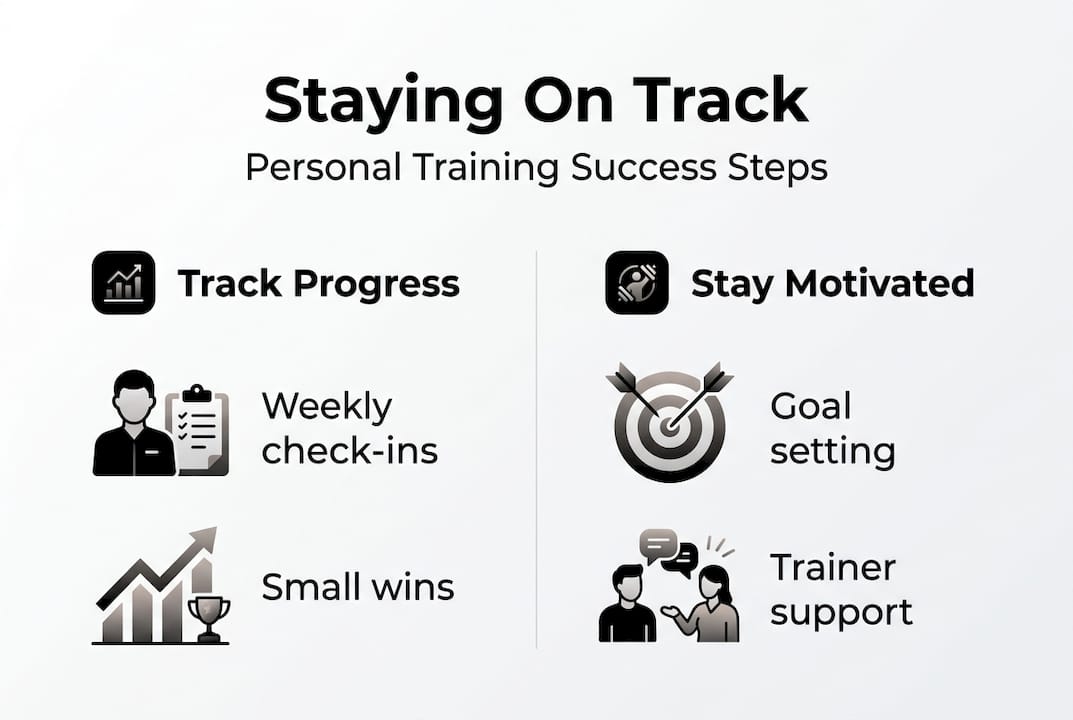
Tracking progress keeps you accountable and reveals patterns that inform program adjustments. Your trainer will monitor performance metrics like weight lifted, repetitions completed, and exercise form. Regular body composition assessments and fitness tests provide objective data on strength, endurance, and flexibility improvements. Goal setting creates milestones that maintain motivation, whether that’s running a 5K, deadlifting your body weight, or completing a full push up.
Staying Committed to Your Personal Training Process
Staying committed requires a combination of intrinsic and extrinsic factors. Intrinsic commitment comes from enjoying the process, feeling stronger, and experiencing better energy and mood. Extrinsic commitment includes the professional competence of your personal trainer, visible progress, and the social support of a gym community. Your trainer provides feedback that reinforces positive behaviours and helps you navigate setbacks without losing momentum.

Exploring the Toronto fitness blog offers additional insights on training strategies, nutrition tips, and local fitness events that complement your personal training. Seasonal challenges like winter workout tips for Toronto help you maintain consistency year round, even when weather or schedule disruptions threaten your routine.
Common Challenges and How to Overcome Them
Starting personal training comes with obstacles that can derail progress if you’re unprepared. Recognising these challenges early and applying practical solutions keeps you on track and prevents frustration.
Lack of motivation often strikes after the initial excitement fades. Combat this by setting short term goals that provide frequent wins, such as mastering a new exercise or adding an extra session each week. Your trainer can introduce variety to keep workouts engaging and remind you of the progress you’ve already made.
Time Conflicts
Time conflicts arise when work, family, or other commitments compete for your attention. Prioritise training by scheduling sessions at consistent times and treating them as non negotiable appointments. Early morning or lunchtime slots often work best, as they’re less likely to be disrupted by unexpected demands. Communicate schedule changes with your trainer promptly to reschedule rather than skip sessions.
Injury Worry
Injury worry is common, especially for beginners or those returning after a layoff. Trust your trainer to design a program that respects your current capacity and progresses gradually. Report any discomfort immediately so exercises can be modified before minor issues become serious problems. Proper warm ups, cool downs, and technique coaching minimise injury risk.
Plateaus
Plateauing happens when your body adapts to the training stimulus and progress stalls. Your trainer will adjust variables like intensity, volume, exercise selection, or rest periods to reignite adaptation. Additionally, patience and trust in the process are essential, as plateaus are a normal part of long-term training.
The table below compares common challenges with practical solutions you can implement immediately.
Injury Prevention
Injury prevention and recovery methods are integral to sustainable training. Chiefly, exercises that directly address the limitations in your muscle system, promoting better strength and mobility. Your trainer may incorporate these techniques into your program or refer you to specialists when needed.
Key injury prevention and recovery tips include:
- Warm up thoroughly before each session with dynamic movements that prepare muscles and joints for work
- Prioritise proper form over lifting heavier weights or completing more repetitions
- Allow adequate recovery between sessions, including sleep and nutrition to support tissue repair
- Communicate any pain or discomfort immediately rather than pushing through it
- Integrate mobility work and specific exercises for your situation to promote output and stability
| Challenge | Solution |
|---|---|
| Lack of motivation | Set short-term goals, introduce workout variety, and track small wins. Build to long-term commitment rather than motivation. |
| Time conflicts | Schedule consistent session times, prioritise training as appointments |
| Injury worry | Communicate discomfort early, trust gradual progression, focus on form |
| Plateauing | Adjust intensity and volume, vary exercises, maintain patience |
| Cost concerns | Explore package deals, group training, or semi private sessions |
Pro tip: Leverage local facilities near Davisville that combine therapeutic modalities and personal training for injury recovery. To get a better idea of how we do this at Striation 6, sign up for our Free Posture Assessment, a great introduction to Muscle System Work.
Additionally, exploring local personal training options through community recommendations and reviews helps you identify trainers and facilities with strong reputations for addressing specific challenges. Visiting the best gyms in Toronto gives you a broader perspective on what’s available and how different environments support various training styles.
Start your personal training journey with Striation 6 in Toronto
Ready to take the next step towards your fitness goals? Striation 6 offers expert personal training in the heart of Toronto’s Davisville area, making it convenient for residents to access professional coaching and customized programs. Our certified trainers specialize in creating science-backed plans tailored to your unique needs, whether you’re building strength, recovering from injury, or simply seeking accountability and support.
Accordingly, we provide free consultations that include movement assessments, goal setting, and personalized recommendations to help you start strong. Our boutique facility features high-quality equipment, low wait times, and a welcoming atmosphere where you’ll feel comfortable and motivated. Flexible scheduling options accommodate busy lifestyles, with sessions available mornings, evenings, and weekends.
Striation 6 membership options include:
- One on one personal training with dedicated coaches who track your progress and adjust programs as you advance
- Small group fitness classes that combine professional guidance with community support and cost efficiency
- Free trial periods to experience our facility, meet trainers, and confirm we’re the right fit for your journey
- Hybrid programs that combine your Personal Training experience with different gym memberships at manageable weekly costs
- Health assessments that measure body composition, movement quality, and fitness benchmarks to inform your program
Pro tip: Maximize your free trial by arriving prepared with questions about your goals, any physical limitations, and your preferred training style. Use the session to test equipment, observe the gym culture, and assess whether the trainer’s coaching resonates with you. This proactive approach ensures you make an informed decision and start your journey with confidence.
Discover how personal trainers in Toronto at Striation 6 combine expertise, personalized attention, and a supportive environment to help you achieve lasting results. As I’ve previously suggested, you can explore our Toronto fitness trainers page to learn more about our team’s qualifications and specializations. You can also visit our fitness gym in Toronto to see our facility and book your complimentary consultation today.
FAQ about starting personal training in Toronto
Your first session typically includes a movement assessment, goal discussion, and a sample workout to gauge your current fitness level. The trainer will ask about your health history, exercise experience, and any physical limitations to design a safe, effective program tailored to your needs.
Beginners benefit most from two to three sessions per week, allowing adequate recovery between workouts while building consistency. This frequency supports habit formation and delivers visible results within 30 days for most people starting a structured program.
Look for trainers certified by recognized organizations like CanFitPro, NESTA, or CSEP, along with current CPR and AED training. These credentials ensure they meet professional standards and possess the knowledge to design safe, effective programs based on exercise science.
Additionally, look for trainers who have had education through the Resistance Training Specialist and Muscle System Specialist programs. These education bodies provide leading edge information and systems for exercise development.
Yes, many Toronto trainers specialize in corrective exercise and work alongside physiotherapists to support injury recovery. Facilities like The Elevated Athlete and Urban Health Group integrate therapeutic and training services, providing comprehensive care that addresses pain, restores movement, and builds strength safely. At Striation 6, Muscle System Work directly address pain and limited movement using data-driven, customized exercise.
Set short-term goals that provide frequent wins, track your progress through measurements and performance benchmarks, and communicate openly with your trainer about challenges. Joining a supportive gym community and exploring resources like the free consultation with Toronto fitness trainers also reinforces commitment and keeps you engaged long term.
Recommended

Diamond-Level Toronto Personal Trainer & Co-Founder of Striation6
I help people experiencing pain and who might confused or concerned about how to exercise in safe, effective manner using Muscle System Work and providing customized, fun and effortful exercise that makes bad stuff in your body feel better and the good stuff feel great.
As the founder of Striation 6 and an Exercise Professional with more than 20 years of experience, it is important to me that I set the example of our Mission: to help as many people as possible feel, function, look and live better through exercise.